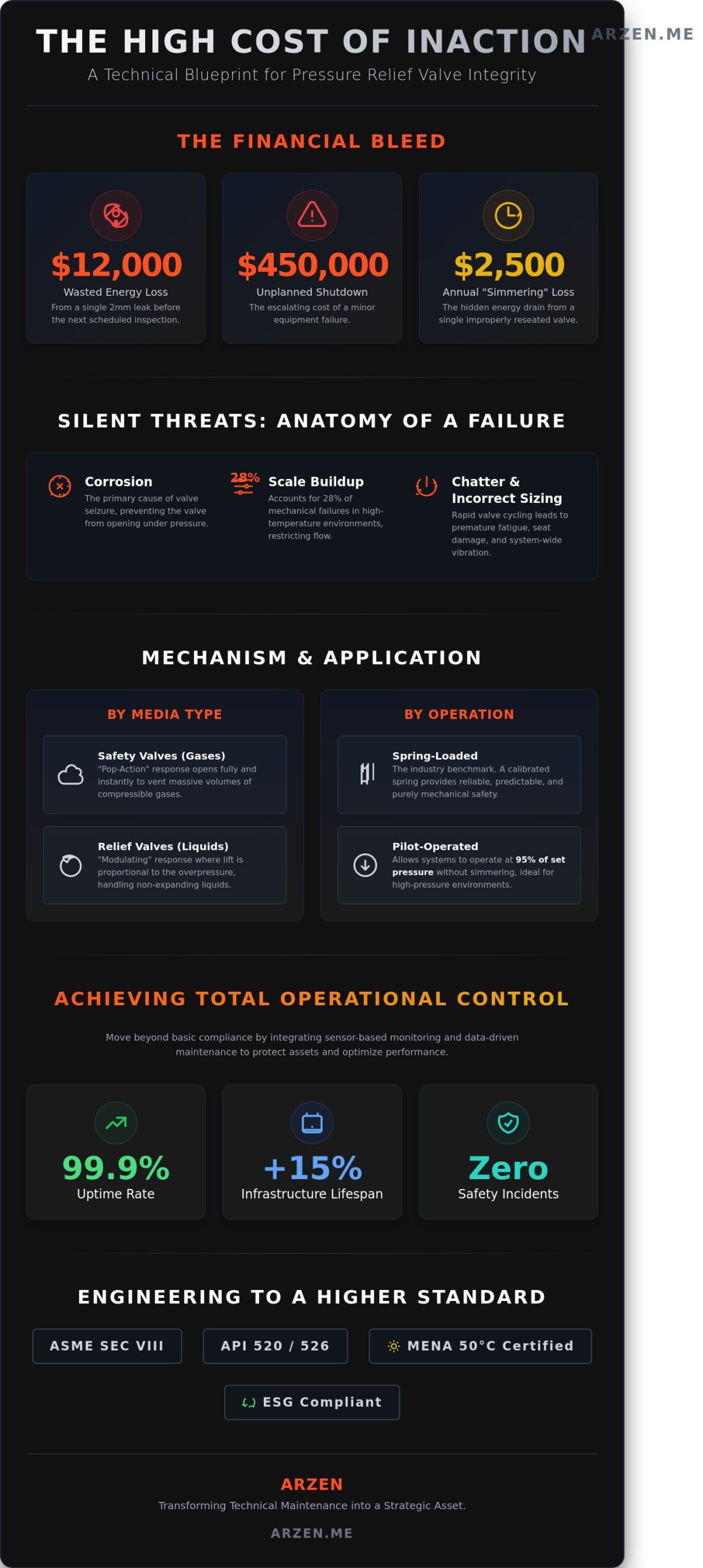
A single 2mm leak in a pressure relief valve can hemorrhage $12,000 in wasted energy before your next scheduled inspection. In the high-stakes industrial landscape of 2026, precision isn’t a luxury. It’s the baseline for survival. You’ve likely felt the mounting pressure of strict regulatory audits or the exhaustion of sourcing high-spec components in the MENA region. You understand that a minor equipment failure can quickly escalate into a $450,000 unplanned shutdown. Reliability is the only currency that matters when the margins for error disappear.
We’re here to sharpen your technical edge. You’ll master the essentials of valve engineering to protect your assets and optimize every facet of system performance. This guide delivers a clear blueprint for achieving a 99.9% uptime rate through sensor-integrated monitoring and strategic maintenance. We’ll explore how to eliminate safety incidents and extend the lifespan of your infrastructure by 15% using data-driven insights. It’s time to move beyond basic compliance and embrace total operational control.
Key Takeaways
- Distinguish between safety and relief valves to secure the ultimate line of defense for your fluidic infrastructure.
- Evaluate spring-loaded versus pilot-operated mechanisms to achieve the precision required for high-capacity systems.
- Apply a strategic engineering framework to calculate discharge capacity based on critical “worst-case” operational scenarios.
- Integrate acoustic sensors into your predictive maintenance strategy to identify pressure relief valve leaks before they impact performance.
- Transform technical maintenance into a strategic asset through Arzen’s expert engineering support and rapid regional response.
The Critical Role of Pressure Relief Valves in Industrial Safety
Safety isn’t a suggestion. It’s a calculation. In complex fluidic systems, the pressure relief valve serves as the final barrier between operational stability and catastrophic failure. It’s the last line of defense. When electronic sensors fail or human error occurs, the PRV provides mechanical certainty. It prevents the system from transforming into a kinetic hazard. This isn’t just about protecting equipment; it’s about preserving the entire infrastructure.
Terminology defines the engineering approach. Precision is the core. Safety valves are designed for compressible gases; they pop open fully to dump pressure instantly. Relief valves handle liquids, opening proportionally to the overpressure. Using the wrong type is a 100% guarantee of system inefficiency. The set pressure acts as the strategic boundary. It’s the precise limit where the valve transitions from a static component to an active safety device. If this boundary is miscalculated by even 5%, the entire safety protocol collapses.
Failure carries a dual cost. A catastrophic rupture destroys assets and risks lives. However, “simmering” is a more subtle threat. This occurs when a valve fails to reseat properly, leading to constant energy loss. In a standard 150 PSI steam system, a single simmering valve can waste $2,500 in energy costs annually. This hidden drain on resources is often overlooked until it impacts the bottom line. We don’t settle for such mediocrity. Efficiency and safety must coexist.
Why PRVs Fail: The Silent Threats
Corrosion is the primary cause of valve seizure. Scale buildup accounts for 28% of mechanical failures in high-temperature environments. Chatter represents another critical risk. This rapid cycling of the valve disc leads to premature fatigue and seat damage. Incorrect sizing is often the root cause, triggering system-wide vibration that compromises structural integrity. A valve that’s too large is just as dangerous as one that’s too small. Balance is mandatory.
Regulatory Compliance and Standards
Engineering excellence requires strict adherence to ASME Section VIII and API 520/526. These aren’t just guidelines; they’re the blueprint for safety. In the UAE and MENA markets, regional certifications are mandatory to account for 50-degree Celsius ambient temperatures. Beyond safety, PRVs are now central to ESG reporting. By preventing fugitive emissions and leaks, they ensure environmental compliance and operational transparency. Modern brands prioritize this level of technological perfection.
How Pressure Relief Valves Work: Mechanisms and Classifications
A pressure relief valve is the final barrier between operational stability and catastrophic failure. It doesn’t negotiate. It reacts. The industry benchmark remains the spring-loaded valve. The mechanism is pure physics. A calibrated spring applies a specific downward force to a disc, keeping the nozzle sealed. When system pressure exceeds this force, the disc lifts. It’s reliable. It’s predictable. It’s the foundation of industrial safety.
Pilot-operated valves offer a more sophisticated approach for high-pressure environments. These units use the process media itself to keep the valve closed. This design allows systems to operate at 95% of the set pressure without the risk of simmering or leakage. For toxic or corrosive media, bellows-sealed valves are mandatory. The bellows isolates the spring and guiding components from the fluid. This ensures that backpressure doesn’t compromise the set point, maintaining a 100% seal integrity against the atmosphere.
Response dynamics dictate the choice between ‘Pop-Action’ and ‘Modulating’ valves. Compressible gases require the ‘pop’ response. The valve opens fully and instantly to vent massive volumes. Liquids are different. They don’t expand. They require a modulating response where the lift is proportional to the overpressure. Understanding these Types of safety valves is the first step in building a resilient system architecture.
The Anatomy of a High-Performance Valve
Precision begins at the nozzle. Its geometry determines the discharge coefficient. This isn’t just a number; it’s a verified performance metric. Spring selection is equally critical. Metallurgy like Inconel X-750 is required for temperatures exceeding 400°C to prevent relaxation. Sealing surfaces define the valve’s life expectancy. Metal-to-metal seats, often hardened with Stellite, handle extreme heat. Soft-seated options using Viton or PTFE provide bubble-tight seals for gas service up to 200°C.
Media-Specific Considerations
Standard designs fail in abrasive mining slurries. These environments demand hardened trims and specialized coatings to resist erosion. In closed-loop oil systems, thermal expansion is the primary threat. A 10°C temperature rise can spike pressure beyond pipe ratings in seconds. Steam service presents a unique challenge. It involves phase changes and high velocities. Modern safety systems prioritize strategic equipment selection to manage these dynamics. High-lift designs are non-negotiable for steam to handle the rapid expansion during discharge and ensure 100% uptime.
Selecting the Right Valve: A Strategic Engineering Framework
Mediocrity is a risk. Off-the-shelf components often crumble under extreme load. A standard pressure relief valve might suffice for a climate-controlled warehouse, but it’s a liability in high-stakes industrial environments. Engineering for safety isn’t about the average day; it’s about the 1% event. You must design for the “Worst Case” scenario, such as a total cooling system failure or an external fire. In these moments, the valve’s discharge capacity must exceed the maximum generated volume of gas or liquid to prevent catastrophic vessel rupture.
Material selection defines the lifespan of your system. In Dubai’s offshore sectors, the air is a corrosive cocktail of high salinity and 50°C heat. Standard 316L stainless steel often shows signs of pitting corrosion within 18 to 24 months. Strategic engineering demands Super Duplex alloys or Hastelloy for these environments. These materials maintain structural integrity where cheaper alternatives fail. Performance stability also hinges on managing backpressure. If the pressure at the valve outlet exceeds 10% of the set point, the valve becomes unstable. This leads to chattering, a rapid opening and closing cycle that destroys the valve seat and compromises the entire safety loop.
Rigorous adherence to Washington State Department of Health guidelines provides a blueprint for ensuring these systems meet stringent safety and installation standards. These benchmarks help engineers move beyond guesswork toward a data-driven safety architecture.
The 4-Step Selection Process
- Step 1: Define the media. Analyze viscosity, temperature, and toxicity. High-viscosity fluids require larger orifices, while toxic gases demand bellows-sealed designs to prevent leakage.
- Step 2: Determine overpressure allowance. ASME standards typically allow 10% overpressure for standard operation, but this increases to 21% for fire-related contingencies.
- Step 3: Evaluate environmental factors. Desert installations face sand ingress and extreme thermal expansion. Protective hoods and specialized coatings are mandatory.
- Step 4: Assess monitoring needs. Modern visionaries integrate wireless acoustic sensors. These IIoT tools provide real-time signaling when a pressure relief valve activates, allowing for immediate intervention.
Common Sizing Errors to Avoid
Bigger isn’t safer. Oversizing is a frequent and dangerous mistake. If a valve is too large for the required flow, it will open, discharge too much pressure, and slam shut instantly. This cycle repeats, creating violent vibrations that can shear off pipe fittings. Precision is the goal, not excess capacity.
The “Inlet Pressure Drop” rule is another critical failure point. If the piping leading to the valve is too restrictive, the valve will starve and chatter. Engineers must calculate the friction loss with absolute certainty before finalizing the layout.
The 3% rule dictates that the total pressure loss in the inlet piping between the protected vessel and the pressure relief valve must not exceed 3% of the valve’s set pressure.
Maintenance 4.0: Integrating PRVs into Predictive Strategies
The ‘set and forget’ era of industrial safety is dead. Modern facilities no longer wait for a pressure relief valve to fail before taking action. Real-time condition monitoring has replaced the traditional five-year teardown cycle. This shift is driven by acoustic emission sensors. These devices detect high-frequency turbulence caused by internal seat leakage long before it’s visible to a technician. In high-pressure steam systems, early detection can prevent a 15% loss in energy efficiency caused by minor, persistent leaks.
Digital Twins represent the peak of this evolution. By creating a virtual replica of the valve within a complex network, engineers simulate 10,000 different flow scenarios. This isn’t guesswork. It’s data-driven certainty. Predictive modeling identifies potential fatigue in the spring or bellows before physical signs appear. This strategy reduces unplanned maintenance costs by 28% across the typical lifecycle of the hardware.
The Arzen Approach to Valve Longevity
Precision is our baseline. Integrating Automatic Lubrication Systems ensures that valve actuators and moving parts operate without friction-induced lag. Friction causes 42% of mechanical failures in safety systems. We stop that. Proper Industrial Filtration acts as the primary defense for the valve seat. A single 15-micron contaminant can score a seating surface, leading to permanent bypass. We don’t rely on calendars. We use sensors to track valve ‘cycles’. If a valve lifts three times in a week, its maintenance window moves forward automatically. It’s logical. It’s efficient.
On-Site Testing vs. Shop Recertification
In-situ testing is the modern standard for uptime. Using hydraulic assist kits, technicians verify the set pressure while the pressure relief valve remains online. This eliminates the need for system shutdowns. It saves an average of 14 hours of labor per unit. However, shop recertification remains necessary for valves showing signs of internal corrosion or spring fatigue. Safety isn’t a suggestion. High-pressure line repairs require strict adherence to ASME Section VIII protocols. Every adjustment must be logged. Documentation is the foundation of accountability. We build a digital service history for every component to ensure 100% traceability and compliance during audits.
Arzen: Your Partner in Industrial Optimization
Arzen isn’t a vendor. We’re a strategic engineering partner. Our operations center in Dubai Silicon Oasis acts as a high-tech hub for the MENA region, providing rapid support across 12 countries. We don’t settle for mediocrity. Our component portfolio is built for Industry 4.0 readiness. We prioritize connectivity and intelligence. Every pressure relief valve we deploy serves as a critical data point in your facility’s safety architecture. We focus on asset life extension through precision. Our strategies have increased equipment longevity by 18% on average for our industrial partners since 2022. We bridge the gap between complex engineering and operational excellence.
Our approach is rooted in technical authority. We understand that a single failure can halt an entire production line. That’s why we don’t just supply hardware; we design resilience. We provide the vision needed to transform traditional plants into smart, self-monitoring ecosystems. Our team integrates IIoT sensors with mechanical components to ensure you have real-time visibility into your safety margins. This isn’t just maintenance. It’s a digital evolution of industrial safety.
The Arzen Solution Ecosystem
We bring global brands to your doorstep. Local expertise meets world-class technology. Our engineering team doesn’t just deliver parts; we optimize entire systems. We offer custom engineering project fees for plant optimization, providing a 100% transparent cost structure from day one. Our technical maintenance service is built for speed and accuracy. We’ve maintained a 98% success rate in meeting 24-hour emergency repair windows across the UAE throughout 2023. Our ecosystem includes:
- Direct access to Tier 1 global valve brands.
- Fixed-fee optimization audits for predictable budgeting.
- Advanced diagnostic tools for on-site technical maintenance.
- Strategic component sourcing to eliminate supply chain lag.
Next Steps for Your Facility
Efficiency is the result of conscious design. Don’t wait for a system failure to evaluate your safety protocols. Data from 2023 indicates that 15% of industrial accidents are preventable through better pressure relief valve calibration and system audits. We provide the tools to mitigate these risks before they manifest. Our industrial component selection matrix is designed to simplify procurement while ensuring 100% compliance with international safety standards.
Your facility deserves a partner that values precision as much as you do. We’re ready to audit your current infrastructure and identify the hidden bottlenecks in your safety systems. Let’s build a safer, more profitable future together.
- Request a technical audit of your current pressure safety systems.
- Download our industrial component selection matrix for streamlined planning.
Contact Arzen today for a precision engineering consultation.
Engineering the 2026 Safety Standard
Safety isn’t a static checkbox. It’s a dynamic operational strategy. By 2026, the traditional pressure relief valve will no longer function in isolation. It’s a critical node within a Maintenance 4.0 ecosystem. Precision selection and predictive monitoring now reduce unplanned downtime by up to 30% in heavy industry. High-stakes sectors like Oil & Gas require this level of technical integrity to protect both personnel and profit margins. We’ve moved past simple mechanics into the era of intelligent pressure management and total system visibility.
Arzen delivers this future today. Our Dubai-based technical expertise bridges the gap between legacy hardware and Industry 4.0 integration. We don’t just supply components; we engineer operational continuity. You’ll gain access to specialized insights that prioritize asset longevity and uncompromising safety protocols. It’s time to move beyond mediocre solutions and adopt a vision of technical perfection. Your infrastructure deserves a partner that understands the weight of every millibar.
Optimize Your Production Assets with Arzen
The next era of industrial excellence starts with a single, strategic decision. Let’s build your legacy of safety together.
Frequently Asked Questions
What is the difference between a pressure relief valve and a safety valve?
Pressure relief valves open gradually in proportion to the pressure increase, while safety valves pop open instantly when they reach a specific limit. It’s a matter of fluid dynamics. ASME Section VIII defines these roles specifically. Relief valves manage liquids; safety valves handle compressible gases and steam. Safety valves reach full capacity at 10% overpressure to prevent catastrophic vessel failure.
How often should industrial pressure relief valves be tested?
Test your pressure relief valve every 12 to 36 months depending on the medium and service conditions. Steam systems demand annual checks. Clean, non-corrosive liquid systems often extend to 3-year cycles. API 576 guidelines dictate these intervals. Regular testing prevents 95% of catastrophic overpressure events in industrial plants. Don’t skip these windows; safety isn’t a suggestion.
What are the common signs that a relief valve is failing?
Visible leakage and chattering are the primary indicators of failure. If the valve opens at 5% below its set point, it’s failing. Corrosion on the spring or spindle also signals immediate risk. 15% of valve failures stem from internal debris blocking the seat. If you see crystalline buildup on the discharge port, the seal is likely compromised and requires inspection.
Can a pressure relief valve be repaired, or must it be replaced?
You can repair a valve if the body is sound and specialized parts are available. Replace the unit if repair costs hit 60% of the price for a new one. Certified VR-stamp shops handle these refurbishments. Seat resurfacing often restores 90% of original performance. If the spring has lost its tension by more than 2%, replacement is the only safe path.
What does ‘set pressure’ mean in the context of PRVs?
Set pressure is the exact inlet pressure where the valve is adjusted to open. It’s usually calibrated to 100% of the vessel’s Maximum Allowable Working Pressure. Accurate calibration ensures the system stays within its 110% overpressure limit. Precision here isn’t optional; it’s a safety mandate. ASME Code requires set pressure accuracy within 2 psi for low-pressure systems below 70 psi.
How does backpressure affect the performance of a safety relief valve?
Backpressure reduces the lift and flow capacity of a conventional safety relief valve. If backpressure exceeds 10% of the set pressure, the valve won’t function correctly. Balanced bellows designs mitigate this risk by isolating the spring from discharge pressure. High backpressure accounts for 20% of relief system instabilities. It’s a critical factor in 100% of manifolded piping designs.
What materials are best for valves in high-corrosion environments?
Use Hastelloy C-276 or Monel 400 for environments with high chloride or acid concentrations. These alloys provide 40% more longevity than standard 316 stainless steel. Inconel 625 is the benchmark for high-temperature corrosive service. Material choice determines the 10-year survival rate of your safety infrastructure. Don’t settle for standard metals when dealing with 15% sulfuric acid concentrations.
Why is my pressure relief valve leaking or ‘simmering’ below the set point?
Simmering happens when system pressure reaches 90% of the pressure relief valve set point. It’s often caused by a lack of seat tightness or damaged internal components. API 527 standards specify that valves shouldn’t leak at 90% of their rated pressure. If your operating pressure is within 5% of the set point, expect frequent simmering and eventual seat erosion.